



22 Apr The American Crocodile in Panama
By Natalie Warner
Panama is known for a lot of things, including its exotic animals. In this case, we are talking about the American crocodile. They thrive around Panama due to the tropical climate. These guys are one of the more mellow tempered species in the crocodilian family, but that does not make them any less intimidating.

American crocodiles can live up to 100 years with an average lifespan of 60-70 years in the wild (45 years if in captivity). They range from southern Florida, United States to South and Central America, including Panama, and Peru. They can be found in brackish waters of river estuaries, mangrove swamps, and coastal lagoons. The Panama Canal provides many of these ecosystems; crocodiles can be found throughout the canal. While other species can tolerate saltwater due to a special gland, the American crocodile is one of two species of the crocodilian family that can actually thrive. The largest known population can be found in Dominican Republic’s Lago Enriquillo.
Size and Diet
An American crocodile can grow up to 4.6 m (15 ft) and weigh up to 907 kg (2,000 lbs). Some crocodiles have been known to grow over 6 m (20 ft) in South and Central America. One specific example where these larger than average crocodiles can be seen is in Costa Rica’s Tarcoles River, where feeding these animals is a tourist attraction.
Despite being big, these crocodiles eat relatively small prey. Prey includes birds, small mammals, crabs, and snails. Attacks on humans, especially in Panama, are rare but have been known to occur. It has also been known to attack spectacled caiman, another species found in Panama.
American crocodiles digest their food slowly, allowing it to survive several months without eating. These are apex predators on top of the food chain and have no natural predators.
Fun fact: An American crocodile closing its jaw can produce more than a ton/inch2 of pressure. Its opening jaw motion is a lot weaker.
Identifying an American Crocodile
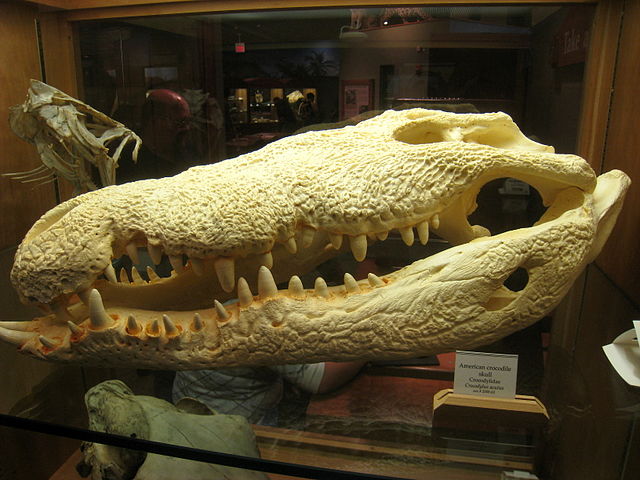
Adults have greyish green coloring with white or yellow undersides. Juveniles have a dark crossband along their backs. Its tail makes up roughly half its body mass. The base of its tail is where its fat reserves are stored. The skull of an American crocodile has a longitudinal hump that is specific to the species.
A Need for Speed
American crocodiles can stay under water for over an hour. They are also very fast. They can run up to 16 kmh (10 mph) and swim up to 32 kmh (20 mph)! Their arms and legs are tucked in when swimming. Their powerful tail helps them achieve these speeds. But they are not sustainable for a long period of time.
Reproduction
American crocodiles reach sexual maturity between 8-10 years for both sexes. Size matters more than age; females usually start mating when they reach 2.8 m (9.2 ft) in length. Courting can last up to 2 months with the males fighting for territory, displaying their impressive set of teeth and roaring. Impressed females respond by roaring.
Females can lay between 30-70 eggs, or clutches. Nests are closely guarded by the female during the eggs’ 75-80 day incubation period. Nests are usually 1.5 m (5 ft) deep and 1.8 m (6 ft) in diameter.
Animals are known to try to raid nests. The green iguana in Panama is known for enjoying these eggs by digging them up. The sex of the crocodile is dependent on the nest temperature. Males are born with warmer nest temperatures. Females are born with cooler nest temperatures. Baby crocodiles typically spend their first five weeks of life with their mothers before becoming completely independent.
Crocodile or Alligator?
Not sure whether you’re looking at a crocodile or an alligator? Easy! Alligators do not exist in Panama, with an exception to caiman. Caimans belong to genus Alligatoridae which is also the same genus as alligators. However, since you asked…crocodiles tend to have a longer, thinner snout. They also have two long teeth on their lower jaw that is visible when their mouths are closed. The American crocodile is lighter in color compared to the American alligator.
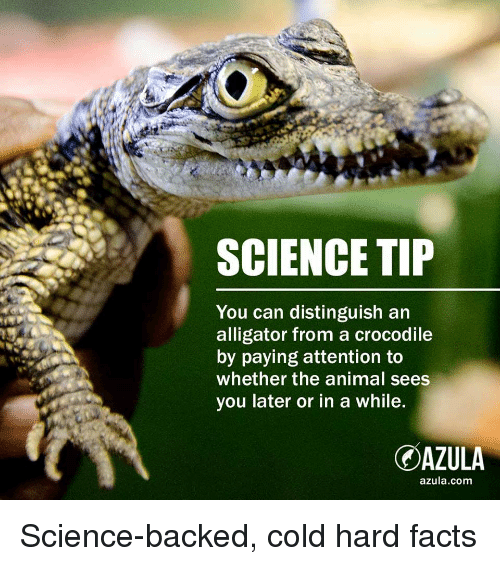
We will be discussing caimans in Panama in a future post (are you as excited as we are?). Follow us on Facebook or sign up for our newsletter (located on the bottom of our home page) in order to read more about those guys, including how to tell the differences.
Threats and Conservation Status
As previously mentioned, American crocodiles have no natural predators. Their hides are prized and commonly used in fashion. It is illegal to hunt them in many countries, although these laws are not heavily enforced. Other threats to American crocodiles include habitat loss and water pollution. It is estimated that roughly 2/3 of crocodile deaths in Florida are due to road collisions.
The International Union for Conservation of Nature (IUCN) considers American crocodiles to be endangered in the United States. They are considered at risk many of its other habitats. The exact numbers of wild American crocodiles may be difficult to know. Survey data from countries outside of the US are virtually non-existent.
American crocodiles are fierce predators with a relatively mild temperament. They can be found around Panama, specifically the Panama Canal. Looking for a chance to see some in the wild? Contact us about a trip to Jungleland!