



23 Mar Moringa
By Natalie Warner
Moringa oleifera is considered to be one of the world’s most versatile and nutrient dense trees. The tree, more commonly known simply as moringa, is easily cultivated and can be found throughout the world, including Panama.
Moringa oleifera is one of 13 species belonging to the Moringacaceae family. This tree has several nicknames including the drumstick tree because of its long shaped pods. Moringa is derived from the Tamil word murungai, or twisted pod, due to the pods it produces. Another nickname is the horseradish tree because its roots taste like horseradish. Moringa oleifera is native to Northwest India. Other species can be found in the Caribbean, Africa, Southeast Asia, and South America.
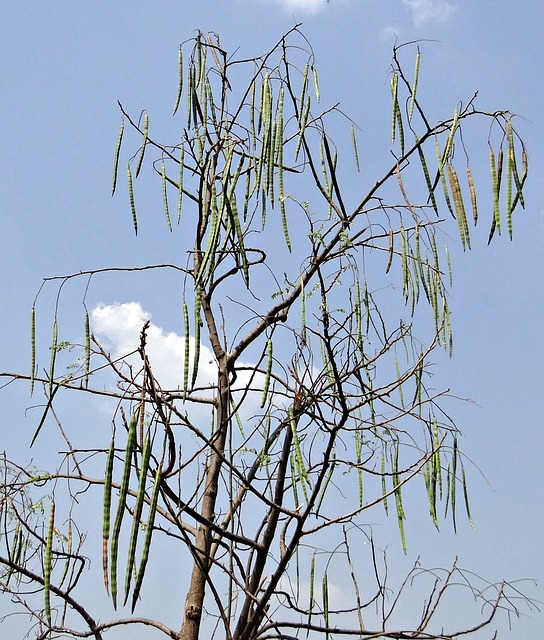
Moringa drumsticks
Cultivation
What makes this species so popular compared to others? It is easily cultivated. Moringa can be cultivated from seeds or from cuttings. It grows well in tropical and subtropical climates. The fast-growing tree can grow up to 30 cm (1 ft) within a month and up to 12 m (39 ft) tall. Moringa is draught resistant. Another appealing aspect to the tree is that the leaves maintain their nutritional value regardless of whether they are fresh, dried, or cooked.
The Tree with Many Purposes
Another name for the moringa tree is “the miracle tree.” It gets this name because of how nutrient dense the leaves are and how versatile the tree is. Nearly all parts of the tree are edible. The leaves are treated as a daily vegetable while other parts of the tree are used for medicinal purposes. The leaves are the most utilized part of the tree. The first study to look at the nutrition value was done in 1989. Claims include that 100 g (3.5 oz) of moringa leaves have 3 times the amount of calcium as milk, 4 times the amount of potassium as bananas, 7 times more Vitamin C than oranges, and 3 times more iron than spinach. Moringa is also a complete protein, uncommon for plant sources.
The tree has been used to treat a variety of ailments including anemia, anxiety, blackheads, cholera, diabetes, cholesterol, epilepsy, ulcers and more. Its seeds can be used for water purification processes. Moringa is also sometimes used to increase breastmilk production thanks to the chemical galactogogue. Beauty products also include moringa for its benefits on skin and hair.
Moringa is also a popular type of animal fodder. In fact, a local egg company feeds moringa leaves to their hens. The tree is used for living fences. Pressed seeds from moringa create Ben oil, named after the unique compound behenic acid. Ben oil has a variety of uses including being used for machinery lubrication, perfume, and fuel.
Considerations, Drawbacks, and Cautions
There is little argument that moringa has a lot of uses and is full of healthful benefits. Like all things, moringa has its drawbacks for anyone hoping to find the “perfect food.” One thing to consider is that moringa leaves are small.
The average leaf is 1-2 cm (0.4-0.78 in) in length and 0.5-1 cm (0.19-0.4 in) in width. It takes roughly 6 cups of leaves to equal the amount of potassium in a medium banana and 7 cups of leaves to equal the amount of calcium in 1 cups of milk. The protein content in moringa leaves is also not significantly higher compared to other legumes. An important note is that most legumes are not complete proteins; moringa is.
Moringa is rich in omega 6 fatty acids. These fatty acids can be healthy for you, but too much can attribute to high blood pressure. Many people from North America get plenty of omega 6s by consuming foods including meat, dairy, and vegetable oils.
Another caution is that studies suggest that consumption of moringa can cause miscarriage and/or infertility. Women of childbearing age who are hoping to get pregnant or are pregnant should consult with their healthcare provider before consuming moringa.
Digestive disturbances have also been reported by some people who consume moringa. The leaves of the plant are a mild laxative and may cause gastrointestinal distress.
Testimonials
Moringa seems to be a popular plant around the Playa Coronado area. Ask around and chances are you will hear that somebody has a tree either in their yard or a tree on their condo balcony in a planter. Others purchase the powder (either loose or in capsule form).
One person interviewed stated she took it to fight off “the big C” (cancer). She did not feel bad once she started using it and did not notice a difference. She has a tree growing on her balcony and consumes the dried leaves daily.
Another person feeds the leaves to her dogs*. She reports that her dogs are more energetic and their coats are shinier. She also consumes the leaves, both fresh in salads and dried when traveling. She reports that it helps with her immune system.
On a personal note, I consumed the powdered form daily for over a month. Nothing noticeable changed for me. I did not notice any the benefits people were talking about. It was my first and only time purchasing moringa.
Moringa oleifera is a tree that has many uses and benefits. It is popular throughout the world, including in the Coronado area. Like any supplement, talk to your doctor prior to using moringa. Do you use moringa? What is your experience with it?
*Consult a veterinarian prior to giving any supplements to your animals.