



07 Jul Humpback Whales
By Natalie Warner
Whale watching season is right around the corner. Up to 2,000 humpback whales travel from the Southern Hemisphere to Panama’s shallow, warm waters. These whales can be seen from July through October. Now is the perfect time to get a glimpse of these majestic giants.
Humpback whales migrate for breeding and birthing purposes. It is the longest known migration in the world, of up to 9,600km (6,000mi) each way! Panama is also one of the only places in the world where migrations occur from both hemispheres. Humpback whales travel from the Northern Hemisphere from December through March. These numbers are significantly smaller (approximately 300 whales) compared to their Southern Hemisphere cousins.
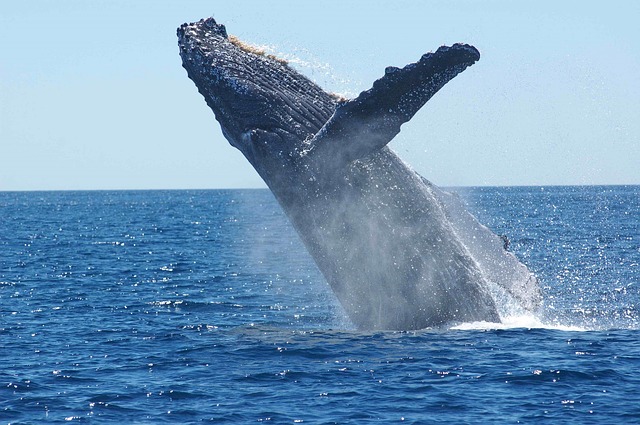
Humpbacks are named because of the way they arch their backs before they dive. They are best known for their playful behavior and their songs. Popular behaviors include fin slapping and breaching (jumping out of the water). Males competing for the attention of females may jump and flap their flukes (tales). More aggressive behaviors like shoving is also popular among males.
Both males and females communicate using various sounds, including snorts, clicks, groans, and grunts. However, only males sing. Scientists are unclear about what the purpose of these songs are ; females seem to take little notice. Some scientists believe songs act as a way for males to bond with each other. Others believe the songs establish male dominance. Males sing the same song in each group, although the songs may change every year. They can be up to 20 minutes long and can be heard from as far as 32km (20mi) away!
Humpback whales have dark grey bodies and white pectoral fins and flukes. Each whale has its own unique color pattern, similar to a fingerprint of humans. They can weight between 25-40 tons and can be up to 18m (60ft) in length. Females are larger than males. Their pectoral fins can be up to 4.5m (15ft) and have tails up to 5.5m (18ft) wide. These whales can live for up to 50 years.
They eat fish, squid and krill and can eat up to a ton of food a day. Humpbacks have baleen plates in place of teeth, which is used to filter their food. Like humans, whales are unable to drink salt water. Adult whales can have up to 600 plates in their upper jaw.

Baleen, source
Panama’s warm and shallow waters make this an ideal spot for breeding and birthing grounds. Females typically have a calf every 2-3 years. Their gestation period of 11 months typically means that they will conceive one year and give birth the following year while in Panama.
Newborn calves weigh up to 1 ton and are 4-5m (12-15ft) in length. They drink between 190 and 375 liters (50-100 gallons) of milk a day and can grow up to 0.5m (1.5ft) in a week! Calves stay with their mothers for a year. Females do not eat during this time and live off their fat reserves.
We are fortunate to live in an area that enables us to see these majestic animals. Coronado Concierge Panama is planning several whale watching trips. Be sure to follow us on Facebook, sign up for our newsletter, or visit our events calendar to know when we schedule our trips!